
Near Bank, Far Bank
On an ordinary Thursday, a retired Brigadier is in a Scottish field firing a shotgun at a drone. Then he drives home to sort out his whisky stock. Thirty-seven years a Royal Marine. This is the second act.
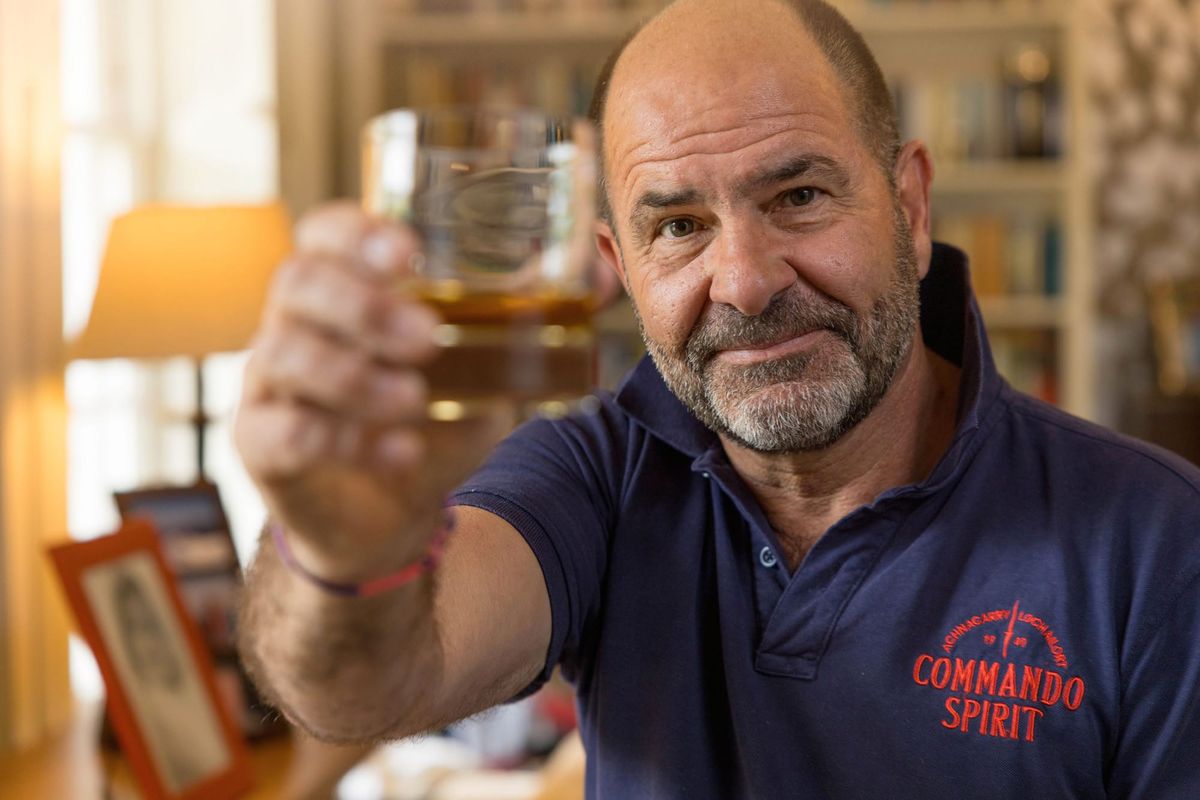
Out in a field in Scotland, on an ordinary Thursday, a sixty-one-year-old retired Brigadier is trying to shoot down a drone, and getting nowhere. He has the right tool for it. A serious shotgun, semi-automatic, more rounds than he needs. None of it makes the slightest difference. The drone is small and quick and will not be hit. The only time it comes down all day is when the pilot slows it right down and flies it straight at the gun, which, as Rory Copinger-Symes is the first to point out, rather proves the point. By the time you can hit the thing, it is already on top of you. Out in Ukraine, where the kit on show that morning is already in use, the rule is simpler. When you see one, you take cover, though shotguns are also proving effective.
He had a good time. He usually does. "I've been firing shotguns at drones today, mate," he said when I caught him. "So that's always fun." Commando Spirit stickers did the rounds of that field too. Then he drove home to sort out a problem with his whisky stock.
That is a fairly representative Thursday for Rory. There are six or seven companies he has some relationship with, a charity board, and a whisky brand he runs more or less out of the house with his wife, and what he mostly wants now is to keep having fun. He gave the Royal Marines thirty-seven years and came out a Brigadier with a CBE, the first British officer to hold a particular security-cooperation chair at US Indo-Pacific Command in Hawaii, Chief of Staff to a fourteen-nation counter-piracy force off Somalia before that. He also, somewhere in the middle of it, helped rewrite the British military's doctrine on how you plan a campaign.
There is a line he has run on for forty years, and like most of the useful ones it sounds like nothing at all. Make the most of wherever you are. He picked it up from his father a long time ago and never put it down, and it turns out to explain a remarkable amount. The retired Brigadier in a wet field firing at a drone for the sport of it. The stickers going round with him. A career that reads as an orderly climb on paper and was, from the inside, nothing of the sort. What he carried out of the door was mostly that one habit, sharpened on a run of postings nobody would have chosen for him.
The zigzag
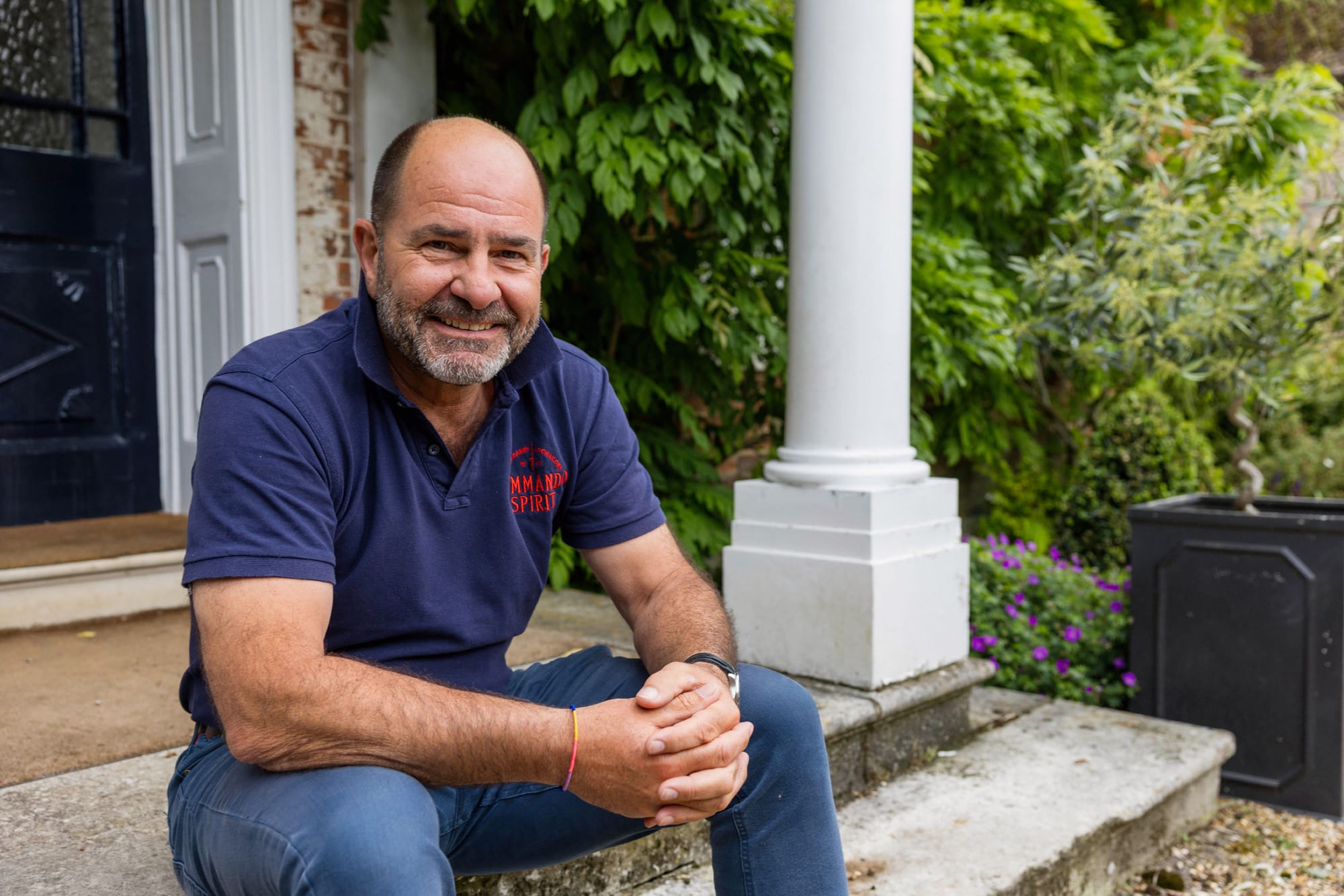
On paper the career looks like a clean climb. From the inside it was a zigzag, and Rory is cheerful that nobody sensible would have drawn it for him. "If you were my career advisor forty years ago, mate, you would never have said, right, Rory, you should go do mine." A spell on HMS Endurance in the Antarctic. Three years on a NATO staff in Lisbon. A red beret with an airborne brigade, throwing himself out of aircraft. Four years in Hawaii. Once, recalled off a ski slope at Easter, he was in northern Iraq within the weekend, commanding eighty men on a job providing humanitarian aid to Kurdish families. "Never had any training for," he says. "Never planned for." By the time he took the uniform off for good, he had not served in a Royal Marines unit for the best part of a decade.
The line that organised all of it arrived in a car, in a storm. He was twenty-one, just made a training officer at the Royal Marines School of Music at Deal, which is not what one joins the Commandos for, and driving to his father's place in Sussex the night the Great Storm came through. His father was an Irishman who had signed up for the British Army in 1944 and given it thirty-six years. In command they called him the Humdinger, and he was not a soft touch. He could see the boy was sulking about the posting. "It doesn't matter what appointment they give you," he told him. "Just make the most of wherever you are." It is, Rory says, one of the last things he remembers the old man saying. He has run on it ever since.
"It doesn't matter what appointment they give you. Just make the most of wherever you are."
At Deal the line did its first real work, with help. His commanding officer was Jonathan 'Jono' Thomson, who had a gift for handing a young officer a task and then leaving him alone to get on with it. Rory calls it mission command now, because that is the phrase he was later taught. At the time it just felt like being trusted. Thomson decided one day that the bandsmen under training should enter, and win, the minor units orienteering championship, on the logic that men who can read music can read a map. They won. Rory beat Thomson himself on the unit cross-country while he was at it. Decades on, two of those same bandsmen, by then the longest-serving musicians in the Band Service and about to retire after forty years apiece, cornered him at Windsor to talk about their time under his command. He thought enough of Thomson to follow him to 45 Commando. He would have followed him most places.
He had become a Marine rather than a soldier almost out of contrariness. The Army's pitch was that his father was in the Army, so he should join his father's regiment, and there was, he says, "a bit of that which I sort of riled against." The Royal Marines recruiter, a man named Andy Canning, offered no such comfort. There was, Canning said, no guarantee he would even get in. Rory took the harder door, and joined expecting to last four years. He is five years past taking the uniform off and still has not entirely managed to leave.
Honest with oneself
He arrived in Northern Ireland at nineteen, a schoolboy with a commission and not much else. He passed officer training, he will tell you, "ninth out of eleven, or something ridiculous." His senior corporal, Mick Crossley, had been in the Falklands. There was, Rory decided, no sense pretending he knew the best way to do anything, so he shut up and learned, and the instinct never left him.
Over time it set into a method, and it is worth being precise about it, because it is easy to mistake for modesty. "I'm not a particularly bright, talented bloke," he says, and when Amanda tells him to stop doing himself down, he corrects her. "It's not doing yourself down, my love. It's being honest with oneself." The honesty earns its keep. Accept that you will not be the cleverest person in the room and you do three things differently. You build a team to cover what you cannot do. You listen to the corporal who has done it before. And, the part people miss, you back yourself anyway. He has no patience for the cult of grinding harder than the next man. "One or two people said they quite like the way I never go on about working hard," he says, "because that's fucking boring. Life's about living and enjoying."
None of this is a ceiling. He watched plenty of officers burn themselves chasing the golden path to the very top, "about two per cent, at maximum," and decided the smarter game was to find what was genuinely within reach and go at it hard, and happily. That took him to Brigadier and a hand on the nation's doctrine, which he would say proves the point rather than dents it. The man who insists he is no high-flyer flew a long way. He simply never confused the climb with the job.
It was that same instinct, a decade on, behind the partnership that made Yankee Company. In Mick Cochran he had a company sergeant major he could shut the office door with and hear the truth from. "He knew he could say pretty much anything to me. Never disrespectful. But he could come and say, Boss, this is a mess." They were, Rory says, "arrogant enough to reckon we had the best company in the unit. Of course we did. But we did."
Here is the part that turned out to matter most once the structure fell away. Commanding an assault group, the Corps' landing-craft crews, men who had spent their working lives driving boats he never had, he learned to check constantly whether his orders had actually landed, using his RSM as a sounding board. In the international jobs that came later, where not everyone spoke fluent English and, as he puts it, "people are swimming in different lanes," the habit became survival. Has it landed. He asks the same question now of his whisky producers and his branding team, in the same words. The most transferable thing in thirty-seven years of soldiering turned out to be making yourself understood by people who are nothing like you.
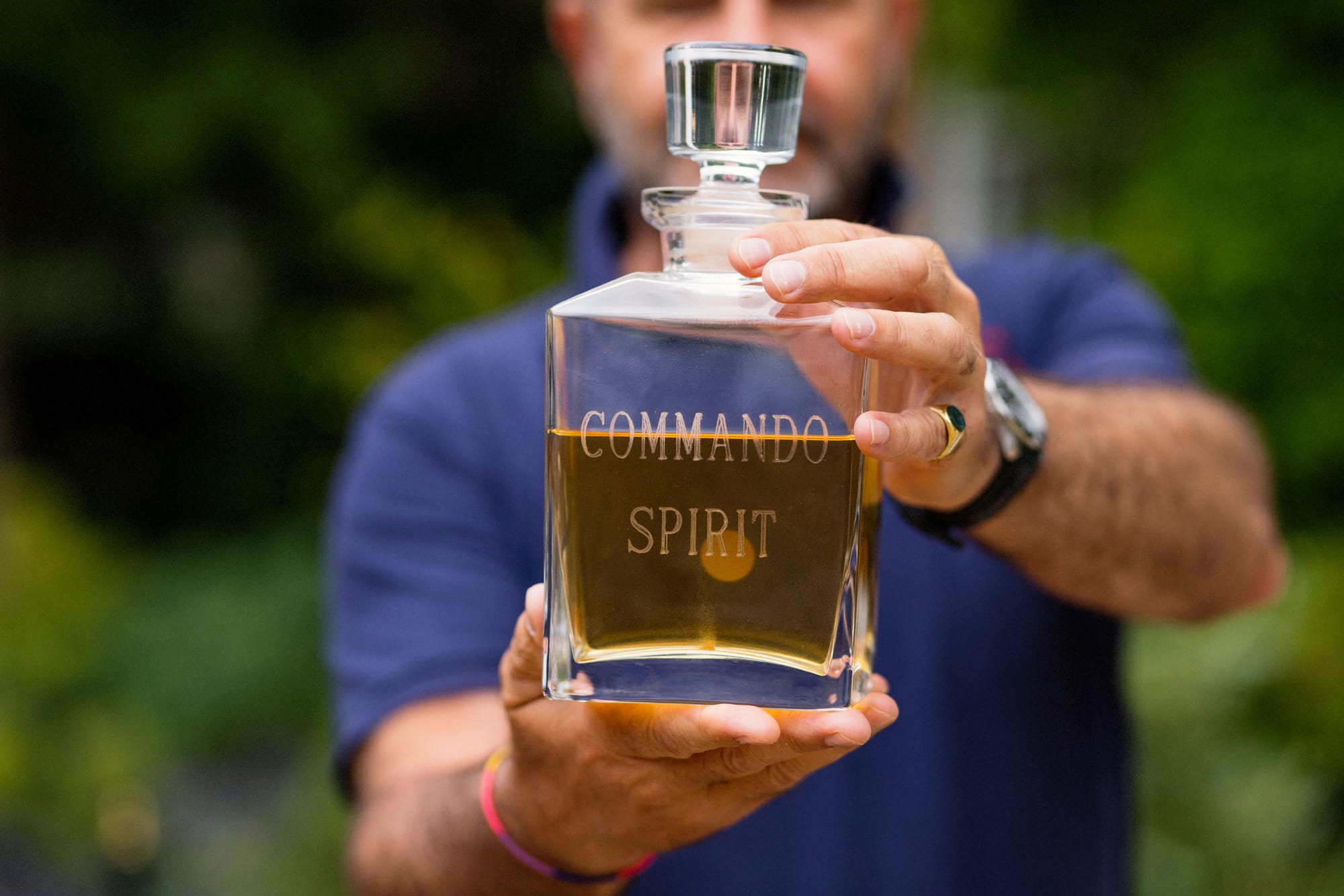
The Marines have two words for the standard he holds to through all of this, understated excellence, which he thinks a Commandant General coined during a defence review and which lodged in him for good. No song and dance. Deliver, and deliver to quality. Years later, briefing the company that would design his whisky bottle, that was the whole brief, in two words. The label had to be good. The liquid inside had to be better.
The plan he runs in reverse
Which brings us back to the planning. In the early 2000s, a newly promoted Lieutenant Colonel, Rory was sent to the joint doctrine centre at Shrivenham, another posting he would not have picked, and put on a four-man team rebuilding British joint doctrine for a world remade by 9/11 and Iraq. He was lead author of the campaign-planning volume. The discipline it sets out is unambiguous. Fix the end state. Define the far bank. Work back from it in sequence until you reach the start line.
He does the reverse with the whisky, on purpose. "As a military planner we start with the end state and work our way back," he says. "I'm almost flipping that completely. I'm going from the near bank towards the far bank, rather than identify the far bank and come back." Eat a bit, shit a bit, is the version he uses out loud, and it is not in the doctrine.
"I'm going from the near bank towards the far bank, rather than identify the far bank and come back."
He has not stopped planning. He did the Institute of Directors' modules on the way out, and he will talk you through what a board needs and how you would structure things before an IPO. What changed is the direction of travel. There is even a name for the method he has landed on. Silicon Valley calls it the lean start-up: build the smallest thing that works, measure, learn, do it again. Rory may never have read a word of it. When someone put the term "minimum viable product" to him, it did not quite fit. He was after a good product from the start, he said, not a rough first go. He got there the way a commando gets to most things. Turn up, work out what is actually in front of you, adapt, have a go.
He did not know the drinks trade when he started, and he is learning it at pace. Margins. Pricing. Cash flow. The difference between a number that tells you something and one that does not. He badgers his accountant for a graph rather than a spreadsheet, because "we're looking to the future, it's not about past performance." He uses AI most days. And he has made one large, deliberate call, which is not to grow… yet. He had wanted the whisky cheap enough for a young Marine to afford, and the economics of a small-batch premium spirit simply refused to allow it. So he stopped fighting them. It is a premium product now, fewer bottles, better margin, no ambition to scale. "We're enjoying what we do," he says. "We don't need to go there."
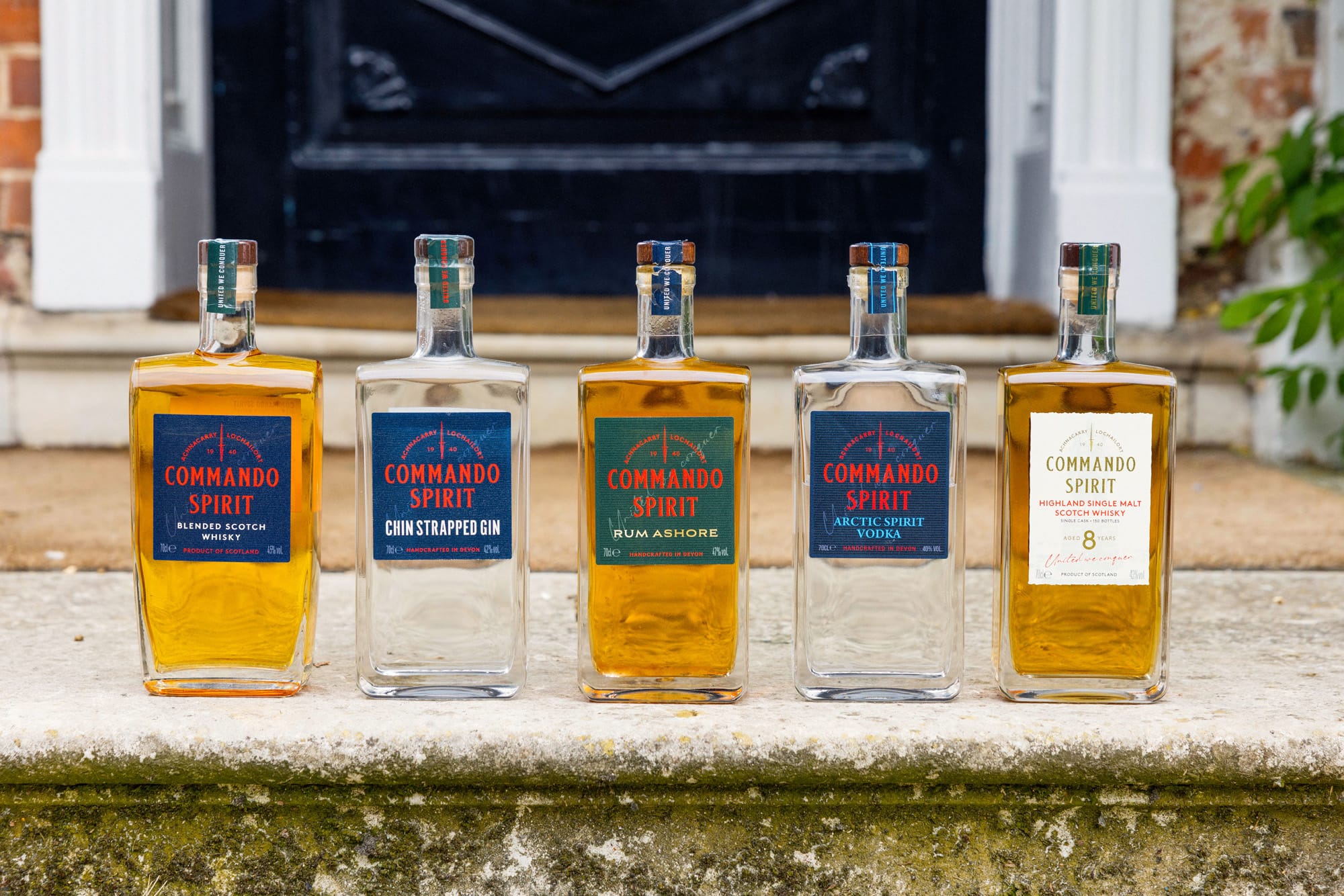
The whisky itself goes back to a sideboard in Arbroath around the turn of the millennium. The Scottish Whisky Association had been up to value the 45 Commando officers' mess collection, reckoned to be the second largest private whisky collection in Scotland behind only Gleneagles, and on the way out they taught Rory to blend across the regions from a tray of six glasses. He went home and started making his own. On Friday nights a fellow company commander, Dave King, would come over for fish supper, and Amanda, by then pregnant with their first or just delivered of him, would call it early. "Right, over to you two. Don't make too much noise," and off to bed. Rory would produce a decanter of whatever he had blended that week. "Right, Dave. What do you reckon's in here?" There was no recipe. It was "a complete game of just what I had available that had already been opened and partially drunk." Dave would guess Islay. Rory would throw him by tipping in a splash of bourbon. They would talk rubbish for hours.
The idea got its name years later and an ocean away. In Hawaii, in quarters less than a hundred yards from the entrance to Pearl Harbor, Amanda turfed him out one evening for a girls' night and the neighbour fed him instead. The neighbour was an American two-star, a pilot called Jim Eifert, and a few drams into Rory's latest blend Jim said the thing that stuck. "Man, that's so damn good. You've got to do this when you retire." Rory did nothing about it then. But passing through Florida years later, he drove up to hand Jim a bottle of the finished article, label and all. Jim did not want to open it. "Mate," Rory told him. "It's to be drunk."
It has not all been fish supper and good notices. Commando Spirit launched in late 2021 through a joint venture with a small Scottish distillery, and inside two years the joint venture was finished, undone by a trademark dispute and a partnership that, in his word, "went south." It "really pissed me off at the time," he says, and he now files it under "a great stepping stone." The lesson he draws is not really about contracts, though he will tell you to get those right too. It is about people. "I've been too trustful," he says. "I assume they might have what we had in the military, and expect them to do what they said they'd do." The thing that grips him most about civilian life is the people who promise something and then go quiet on you. "I think it's deplorable." It is also, he reckons, why a former serviceman is so often worth the bet. Not the cap badge. The habit of ringing back to say it is not done.
The bottle on the bar
There is a tradition in the officers' mess at 45 Commando, particular to that mess rather than the whole Corps, that an officer leaving the unit buys a bottle of whisky for the bar. It is opened on his last day, and the mess keeps that whisky in stock from then on, so that every officer who passes through afterwards drinks, at some point, the leaving gift of a man who has gone. You choose by asking the local supplier which bottles the bar does not already have. Over decades you build a shelf of whiskies, each one tied to a name and a date.
Rory went back to Condor recently and found the book that records it. The first entry is from 1981. Andy Canning, the same officer who had recruited him, who told an eighteen-year-old there was no guarantee and then signed him up anyway. The tradition is older even than that, and nobody has yet worked out who started it. Rory's own name is in the book twice, against two bottles he can barely remember choosing, one of them a Kinloch-something he did not even recognise. There is a newer entry now, because the single malt he presented to the mess this year is his own. Commando Spirit, on the shelf beside the rest. The PRI, the unit shop, ordered eighteen more.
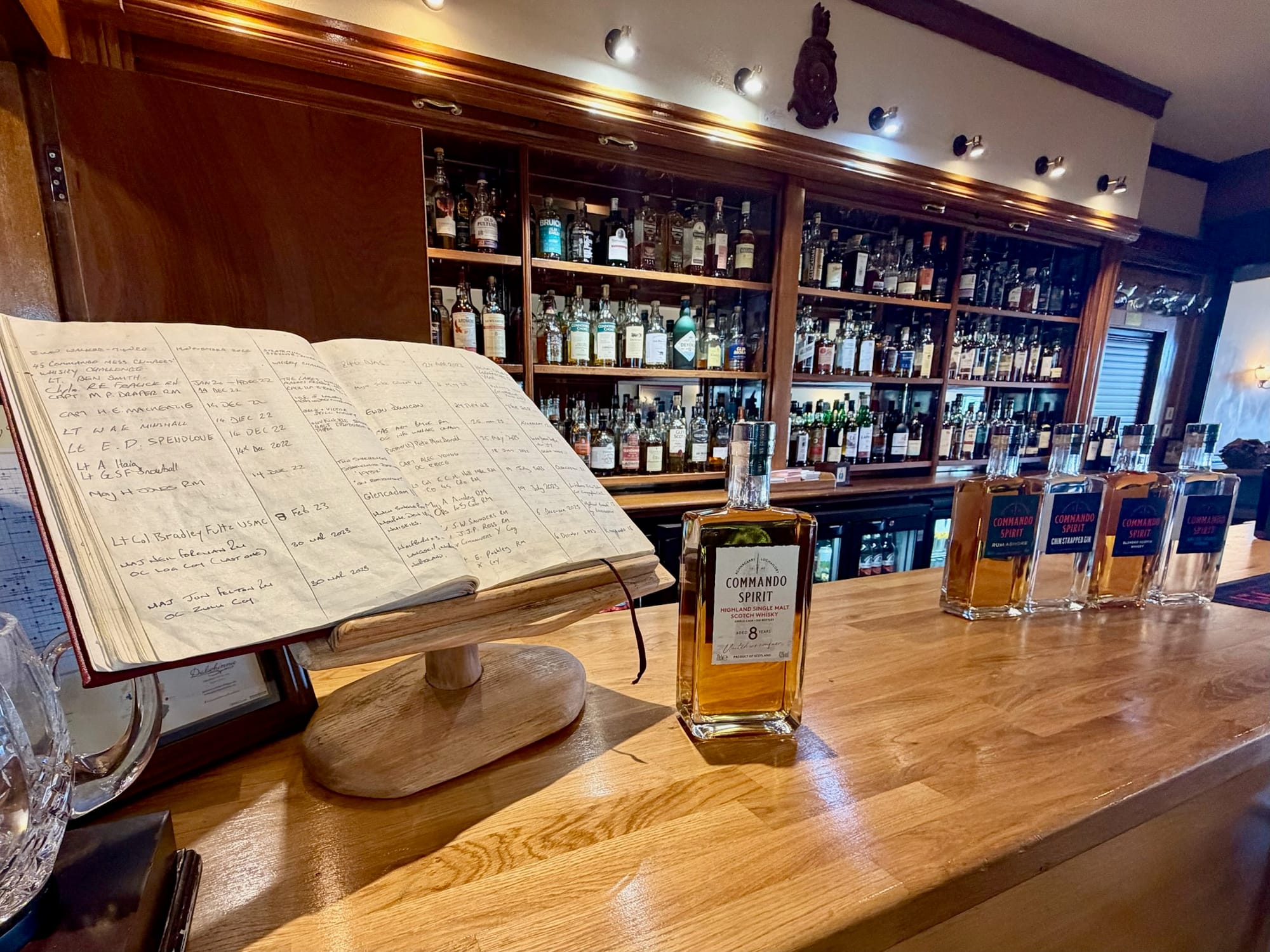
The giving back is not bolted on. It is the same instinct that put the bottle on the bar in the first place. Some of every sale goes to Royal Marines charities. He began by pledging a flat pound from every bottle, found a thin margin could not carry it, and refined the approach rather than dropping it. Eleven thousand pounds went that way last year by his own reckoning, more once you count the indirect, and at one auction a submariner and a paratrooper bid several hundred pounds between them for a single bottle. He does not oversell it. "If you want to make yourself a multi-millionaire, crack on," he says. "That's not me." The reason is plain and unsentimental.
"Last twenty years, mate, we lost a lot of good lads. We've still got a lot of blokes walking around affected. The support bit of me doesn't go away."
Several things, honestly
It would be tidy to call all of this, the brand and the charity board and the advisory work and the writing on AUKUS and the Indo-Pacific, one continuing mission in several forms. Rory will not have it. Asked straight out whether it is one thing or many, he does not pause. "No. The portfolio is a number of different things." What holds it together is not a grand purpose. It is a filter. A former intelligence officer handed it to him on his way out of the Marines: the three Ps, People, Purpose, Pay, and a short list of design criteria he wrote on a piece of paper and kept on his desk. People first, are they trustworthy, do you actually want to spend your time with them. Purpose, does it get you out of bed. Pay, a floor rather than a target. In the early days he would run a new offer down the list before he said yes. He has not applied for a single job since 2021. The work comes to him, and he holds it up against the paper.
He does a fair amount of mentoring now, and the people who find their way to him are often the ones this is for. A Marine eighteen months out, nothing lined up, starting to feel the panic. His advice begins dull and gets braver. First the home economics, the outgoings, how much risk you can actually carry. Then, if you can carry it, take the risk early and go after the idea. Mind the people you are joining, because "if they turn out to be a bunch of knobs, they can't pay you enough to stay." And find the purpose, because the one thing nobody warns you about is that the uniform hands you one for free and civilian life often does not, and a man without a buzz goes looking for it. As for the competition, there is always room. "I'm in the bloody booze market," he says. "I'm never going to compete with Diageo. I don't need to. Find your little niche. Eat a bit, shit a bit. Have some fun while it lasts."
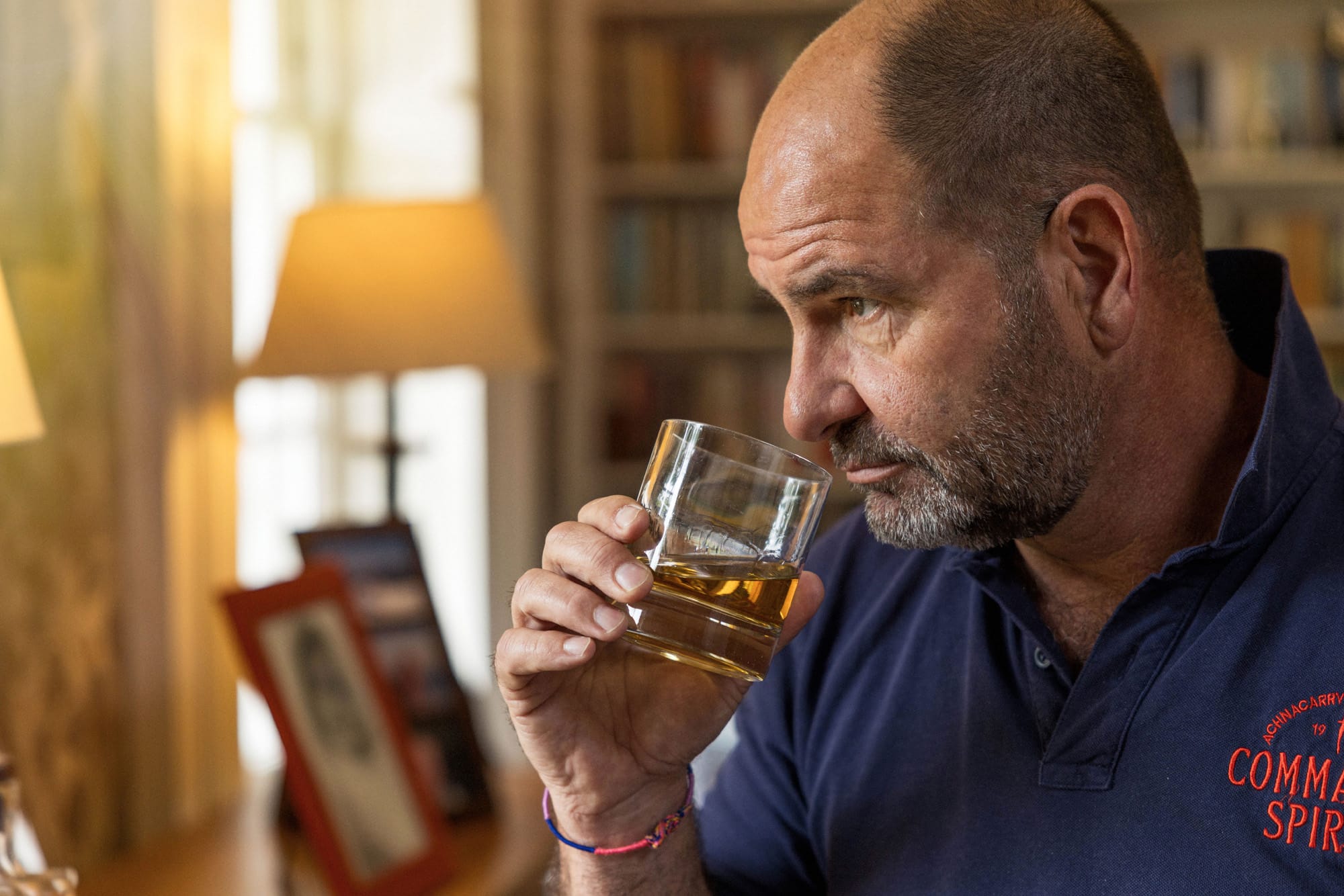
He went up to Scotland three times this year. Once to help a mate launch a book, once to fire a shotgun at a drone he could not hit, once for a charity day with the snipers at 45. While he was there he took a bottle of his own single malt into the officers' mess at Condor, signed the book beneath all the other names, and set it on the shelf. It will stay there now. Some evening years from now, a young officer not long out of training, who never met him and will not think to ask, will pour a measure from the bottle with Rory's name in the book, and drink it at the end of a hard day.
Know someone who belongs here? andrewfjmann@gmail.com