
You Earn It by Doing It
Minus thirty, two in the morning, driving the backfill truck through the Alaskan dark. A Royal Marines commission in a drawer at home. Twenty-six years later he ran the mine. In between is the whole story.
The temperature is somewhere the wrong side of minus thirty, and a man is driving an open backfill truck through the Alaskan dark, facing over his left shoulder, because that is the way the truck is built. Covered head to toe. Twelve hours on the shift, then another two for the overtime, because the children are small and the money is the money. He has a degree in mining engineering. He has, in a drawer at home, a Royal Marines commission. Neither is any use to him at two in the morning on the haul road. What is useful is that he has learned to read the truck — when it will grip and when it will slide — the way a person learns anything, which is by doing it badly, then less badly, then well.
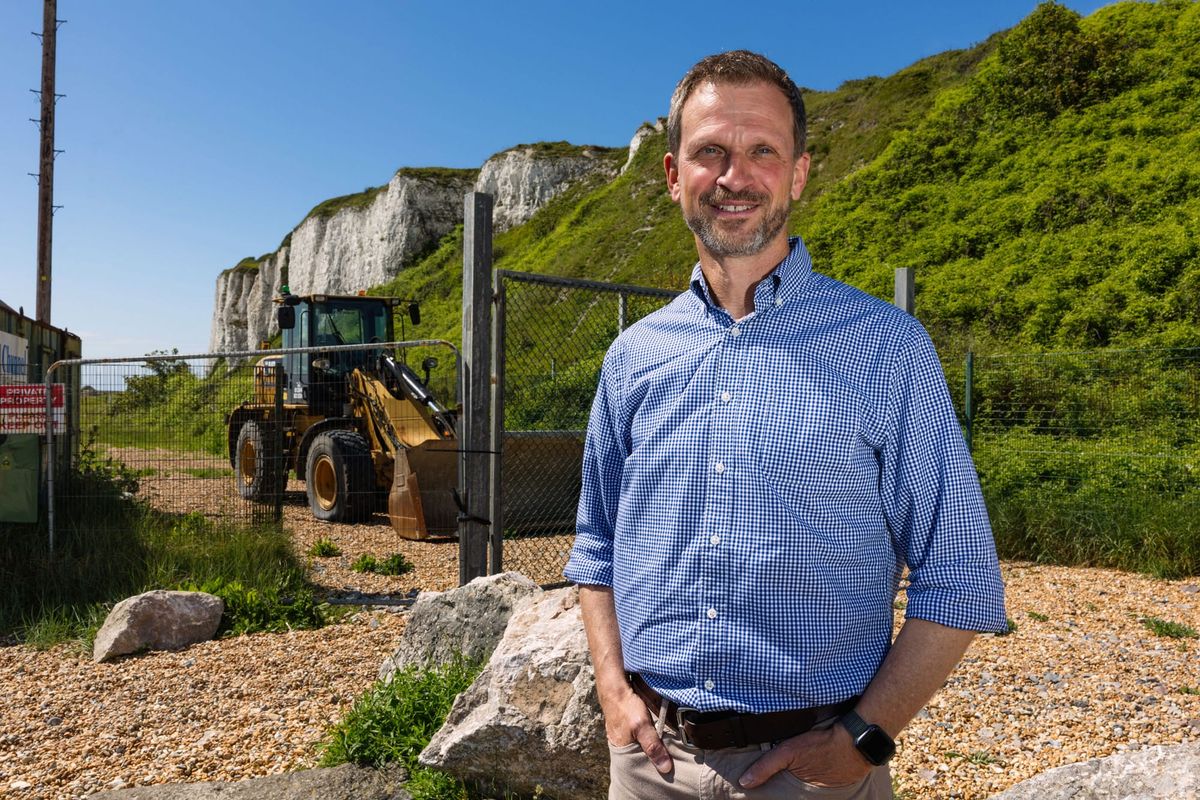
His name is Rich Storrie. The mine is Greens Creek, on an island off Juneau, and the year is around 1998. He will spend three and a half years like this — trucks, loaders, the powder truck, the drills, the bolters, the whole kit — before anyone makes him captain of anything.
By the time he stops, twenty-six years later, Storrie will have worked mines on five continents and in nine countries. He will have watched a copper project in the Gobi Desert grow from a camp of three hundred to a workforce of fifteen thousand. He will have handed a uranium mine to its new owners and run an Arctic diamond mine through a global pandemic. He will go from mine captain to mine president — a jump that, inside a company the size of Rio Tinto, barely happens. Ask him to name someone else who's made it and he goes quiet, then offers, with the certainty draining out of the sentence, "I'm sure there is." There may well be. He can't think of one.
There's a preference underneath all of it, one he has never wanted to break: he earns a job before he runs it.
The bottom field, underground
He arrived at Greens Creek as an engineer, which in mining is a desk with a hard hat near it. He could have stayed there. Instead he asked to go underground and run the kit, and the reason he gives is one any Royal Marine will recognise in a heartbeat.
"You look across at the recruits," he says, back on the bottom field at Lympstone, "and they see what you're doing, and they know you can do it as well as them." So he set out to do exactly that below ground. "I want to be able to demonstrate that I could mine as well as these blokes."
He drove the open backfill trucks, then the forty-tonne production trucks, where the tolerances tighten and the walls come close. He took a telephone clean off a tunnel wall one shift with a loader and only noticed it was gone on the way back. He ran the powder truck. He drilled, charged, blasted and mucked out a heading on his own, start to finish, so that if there were no one else there he could keep the place going. He was underground during an earthquake and didn't feel it; he'd installed too many rock bolts to notice the ground move. At home, the pictures came off the walls.
There's a hard-headed argument for all this, and he makes it. When a man on your crew comes to you at the end of his tether, you can take it at face value or you can ask why now, and you can only ask the harder question if you have sat where he's sitting. "You can't say you deeply understand what the guys are going through," he says, unless you've driven the truck at minus thirty yourself, off the back of your days off, knowing how tiring that is. It is the bottom field's logic, carried underground: on a crew, as on the parade square, the men can always tell who's done it and who hasn't.
"You can't say you deeply understand what the guys are going through unless you've driven the truck at minus thirty yourself."
Two pay cuts
Being good at it cost him, twice, in cash.
He worked up through the shifts to mine captain — top underground pay, the bonus, the lot. Then the mine manager told him the truth about ladders: if he wanted to climb, he had to go back to the office. So he did. He took the cut, lost the bonus, lost the captain's pay, and went back to being an engineer. The numbers stopped working. With three children and a mortgage in Alaska, the family sold the house and moved into a rental, and Storrie bet the lot on himself getting the next job. He did, in Australia, at a rise.
He didn't do it alone. His wife, Bridget, met the sold house, the rental and the next move as part of the adventure — a phenomenal support, his word for it, and he knows how fortunate that made him.
It took discipline. "You have to just box it," he says, "and now I'm doing something else." He found that healthy. He also, clearly, found it hard, because he keeps coming back to the reflex he had to master: "If you feel like, I could actually do that better than you, so stand aside, I'm going to do it, that's an approach you have to let go of."
See the moment, and grab it
Some of the doors he stepped through, he opened. Others simply came ajar while he happened to be standing there.
In Alaska he shadowed the mine surveyor for a month, learning where everything was. The surveyor fell off his truck and broke his arm. The manager turned round and said: you're the surveyor now. Storrie did the job for six months. That is the whole anatomy of it: a gap opens, and he steps in before anyone else moves.
He has a phrase for this, and it is the closest he comes to a philosophy. "The trick is to see the moment, and then to grab it." It is, whether he means it to be or not, the Corps line wearing civilian clothes: first to see, first to adapt, first to overcome.
"The trick is to see the moment, and then to grab it."
The grabbing took him to Western Australia, running the exploratory decline on a diamond mine, until the company approved the project and told everyone to move to the far north of the state, into the heat. "I said, I'm not doing that," and applied instead to run the underground at Diavik, in the Canadian Arctic. From there to Mongolia, where he turned up at a copper-and-gold deposit in the Gobi barely more than a camp — three hundred people when he arrived, fifteen thousand by the time he left, a project that would eventually swallow some fifteen billion dollars. He calls it the wild west. Then Serbia, six and a half years on a lithium project he describes, drily, as "noteworthy because of its politics," which he left as a going concern before any of the trouble that later made it famous. Then back to Namibia to run a uranium mine while Rio Tinto sold it to its Chinese state buyer, and hand it over clean.
Nobody pointed him at a map. In the Corps, he notes, there's a promotion system that drives your career for you. Outside it, there isn't. "You have to drive it yourself." A senior Rio Tinto colleague once told him he'd never met anyone in the industry who'd been to more places. Storrie's own father had been a Royal Marine, made to leave at fifty; he'd filed that away, and had no intention of arriving at fifty wondering what came next.
The moving could have wrecked the children. First daughter born in the UK, son in Namibia, second daughter in the US, then all three dragged, his word, around the world. At thirteen, each was given the choice: boarding school in England, or stay on the road with the family. They are in their late twenties now: a trainee anaesthetist at the Royal Free, an astrophysicist teaching physics and off to a school in Latvia, a barrister just called to the Bar at Middle Temple. The girls won scholarships into British schools, he reckons, because the admissions people looked at children raised in Belgrade and the Gobi and saw something the home-grown applicants didn't have. Far from costing them, all that upheaval made them broad. "They've done incredibly well," he says, like a man who, somewhere along the way, had wondered whether it might go the other way. The credit for how they turned out, he says, is their mother's.
The lab on the ice
In 2019 he went back to Diavik, the Arctic diamond mine, this time as president. He cleaned up the structure, turning four general managers into one, sat himself in the head office in Yellowknife, and decided he was set. Then came February 2020.
Diavik is fly-in, fly-out. No flights, no operation. The president of the neighbouring mine rang Storrie to say domestic flights across Canada were about to shut, that he was putting his own site on care and maintenance, that he was, in effect, done. He went bankrupt. Storrie had a choice with only hard edges: mothball the mine and bleed cash keeping a dead thing warm, or keep the full workforce running and carry the risk of the virus into the camp.
He kept it running. With his team he chartered flights from across Canada, set up segregated reception points where people were screened before boarding, and built a testing laboratory on site, talking a university lab that had been doing mRNA vaccine work for Ebola into running the analysis. Swab on arrival, result inside twenty-four hours, back to work. This was early 2020, when most of the world was still being told to wash its hands and stand apart.
The hardest part wasn't the science. It was the Yellowknives Dene First Nation. The 1918 flu had reached the far north late, around a decade after it tore through Europe, and when it arrived it killed a devastating share of the Indigenous population, close enough in family memory that people knew exactly who had been lost. Now a mining company was proposing to fly outsiders in and out through a pandemic, and the community was, in Storrie's word, paranoid, with every reason to be. So he and his people sat down with them, again and again, and made the case for keeping the wheels on the local economy without putting anyone in the ground. The community came round. Storrie reckons they were, in the end, grateful the mine kept going.
The neighbour's mine went into administration. Diavik cleared something like fifteen million dollars of free cash flow in the year of the pandemic, and well over a hundred million the year after. Nobody on the mine got seriously ill. He says it as flatly as that, which is how you know it mattered.
He has, by his own reckoning, now seen the entire life of the thing. Opened mines, built one, handed one to a state, and finally closed Diavik down at the end of its life, running the rehabilitation as the mine still worked, rather than leaving it as "a long tail to the operation, which doesn't make sense." The company's public phrase for that work is closing with care. Storrie's own framing is colder, and probably truer: you manage how a mine ends because not doing so is bad business. Then he went to recycle the metal after the world had finished with it: battery recycling, which he calls "urban mining." The company raised more than a billion dollars and still ran out of money before it could scale; there was, he says, no sense keeping an expensive president in Switzerland. So he came home.
Now
Home, for now, is Dorset, soft green country with streams running through it, and a consultant's life: a paper that went to the House of Commons, advice for a gold-mining company, the odd job in ferrochrome or magnet recycling, and a run east now and then to see his mother, still near Deal on the Kent coast. A man could ease off a little here. He isn't.
Consulting grates on him. He hands a company an analysis he knows will save it millions, watches the heads nod, and watches nothing happen, and he cannot reconcile himself to work that "just falls on deaf ears." What he misses is the thing he's chased since the backfill trucks: accountability, the outcome in his own hands. "I do bugger all," he says, "except for maybe work every now and again." It is the only flatly untrue thing he says.
When it's hard and a long way from home, the voice that still reaches him isn't a general's. It's a colour sergeant from his own training, Mick Jordan. Straight down the line. A hard bloke, but with empathy. Always immaculately turned out, so you knew the exact standard he'd set, but with humour. The man died of cancer not long ago. Storrie saw the notice, was back in the UK, and thought: why not. He went.
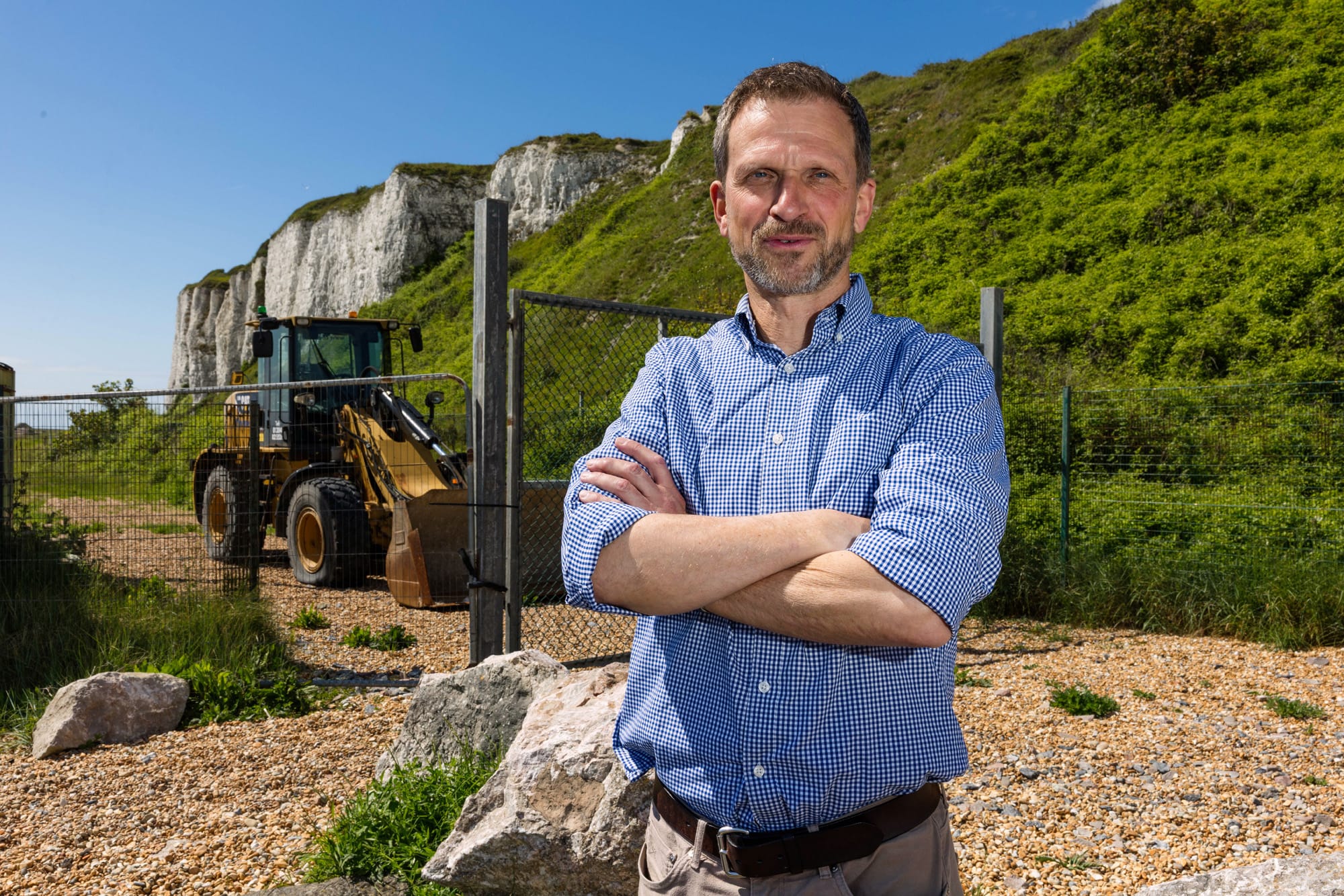
He came out of the Corps with a mining degree, a Royal Marines commission and a commercial diving ticket, and a straight choice between the seabed and the mines. None of the rest of it existed yet: not the nine countries, not the copper in the Gobi, not the lab on the ice. He picked the mines and went looking, and twenty-six years on he has not stopped. He has just signed to run operations again, a new mine, a new country, abroad and soon, for no better reason than that otherwise someone else is driving.
Know someone who belongs here? andrewfjmann@gmail.com